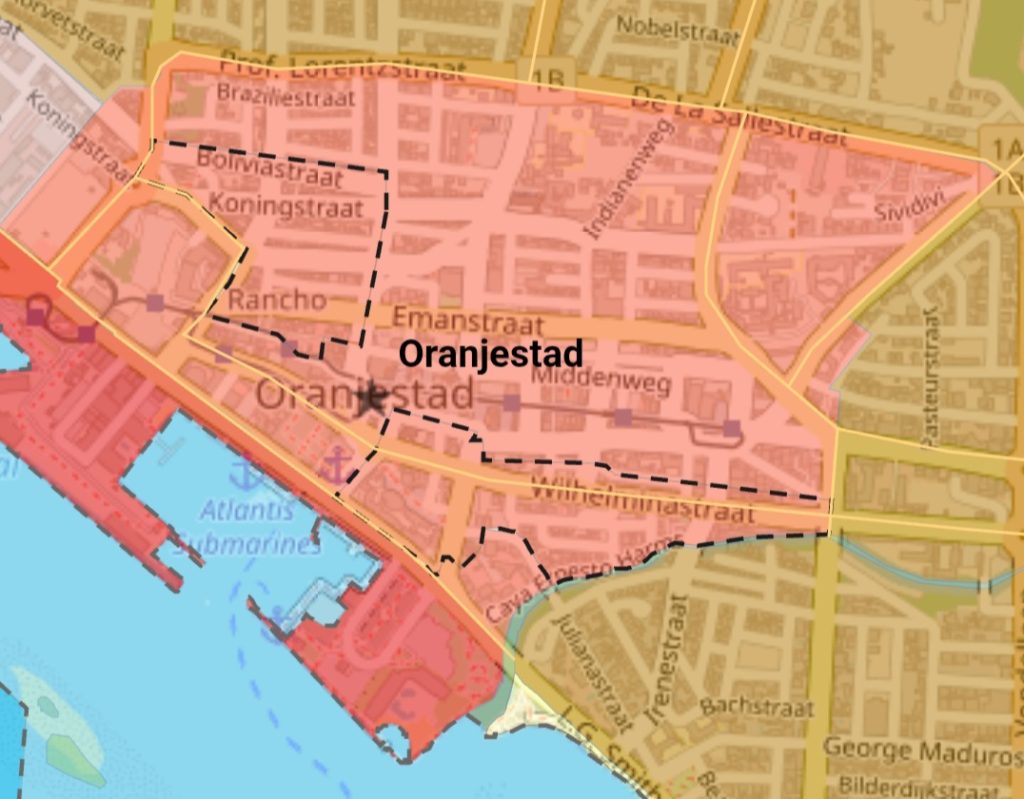
The Government of Aruba has recently announced new fiscal policies that will take effect on January 1, 2026, aimed at stimulating investment, economic development, and entrepreneurship across the island. These policies introduce targeted incentives designed to attract both domestic and foreign investors, with a special focus on revitalizing Oranjestad and San Nicolas, as well as supporting innovative start-ups.
Revitalizing Oranjestad and San Nicolas
On December 12, 2025, the Government of Aruba published a beneficial fiscal policy specifically intended to encourage investment in the centers of Oranjestad and San Nicolas. Both cities hold significant potential for tourism, labor, and recreation, yet they face challenges with outdated infrastructure and vacant properties. To address these issues, the policy offers a package of temporary tax incentives for qualifying redevelopment and investment projects, fostering private investment and sustainable economic growth.
Under this policy, qualifying entities can benefit from a temporary exemption of profit tax and dividend withholding tax for a period of ten years, covering the period from January 1, 2026, through December 31, 2035. Additionally, a two-year exemption of transfer tax and BBO/BAZV/BAVP will apply in 2026 and 2027 for the transfer of qualifying real estate or real estate entities. These exemptions are specifically designed for income, benefits, and transactions directly related to the repurposing and exploitation of real estate within the designated areas of Oranjestad and San Nicolas.
To qualify, entities must be exclusively engaged in redevelopment and exploitation activities within the designated areas, with no other business activities permitted. Investments must meet a minimum requirement of AWG 500,000 or 50% of the property’s ground tax value, whichever is higher. If the conditions are not maintained, the exemptions may be revoked, potentially retroactively. In cases where object-based exemption cannot be applied, a flexible depreciation scheme allows for the redevelopment and renovation costs, up to AWG 500,000, to be depreciated over the same ten-year period, further incentivizing investment in these urban areas.
Supporting Start-ups and Entrepreneurship
In addition to the urban redevelopment incentives, the Government of Aruba has also introduced a start-up policy to encourage entrepreneurship in promising sectors. Effective from January 1, 2026, this policy provides tax relief for newly established companies during their first five years of operation. The goal is to reduce fiscal barriers, promote innovation, and stimulate sustainable economic growth across sectors such as tourism, the knowledge economy, logistics, agriculture, the circular economy, and creative industries.
Under the start-up policy, qualifying companies can receive an exemption on profits of up to AWG 50,000 for the first five years, an increased investment allowance of 20%, and tax deductibility on 50% of new business loans up to AWG 30,000 per financial year. Start-ups are also eligible for favorable treatment under the BBO/BAZV and BAVP regulations, and the statutory minimum wage applies for substantial shareholders employed by the company. Companies must demonstrate annual reinvestment of at least 15% of gross turnover into business growth and meet employee requirements tied to their turnover to maintain these incentives.
Invest in Aruba’s Thriving Future
These new fiscal measures reflect Aruba’s commitment to creating an attractive investment climate for both redevelopment projects in key urban areas and innovative start-ups. By offering targeted tax relief and strategic incentives, Aruba is positioning itself as a prime destination for investment and sustainable economic development in the Caribbean.
More information?
Contact us, the Aruba Investment Agency (ARINA), to explore opportunities and be part of Aruba’s thriving future.